Most people walking into Denny’s aren’t thinking about salads. Let’s be honest — when you picture a Denny’s meal, you’re probably imagining a Grand Slam, a stack of pancakes, or maybe a big burger. The salad is usually the last thing on anyone’s radar.
Table of Contents
But here’s the thing: Denny’s House Salad actually gets ordered more than people think. A lot of diners use it as a side dish with their main meal. Others — especially those watching what they eat — grab it as a light lunch or dinner. And some people are simply curious about whether a diner salad is worth ordering at all.
So if you’ve been wondering about the Denny’s House Salad price, what exactly is in it, how many calories it has, and whether it’s actually a decent choice nutritionally — this breakdown covers all of that.
What Is Denny’s House Salad?
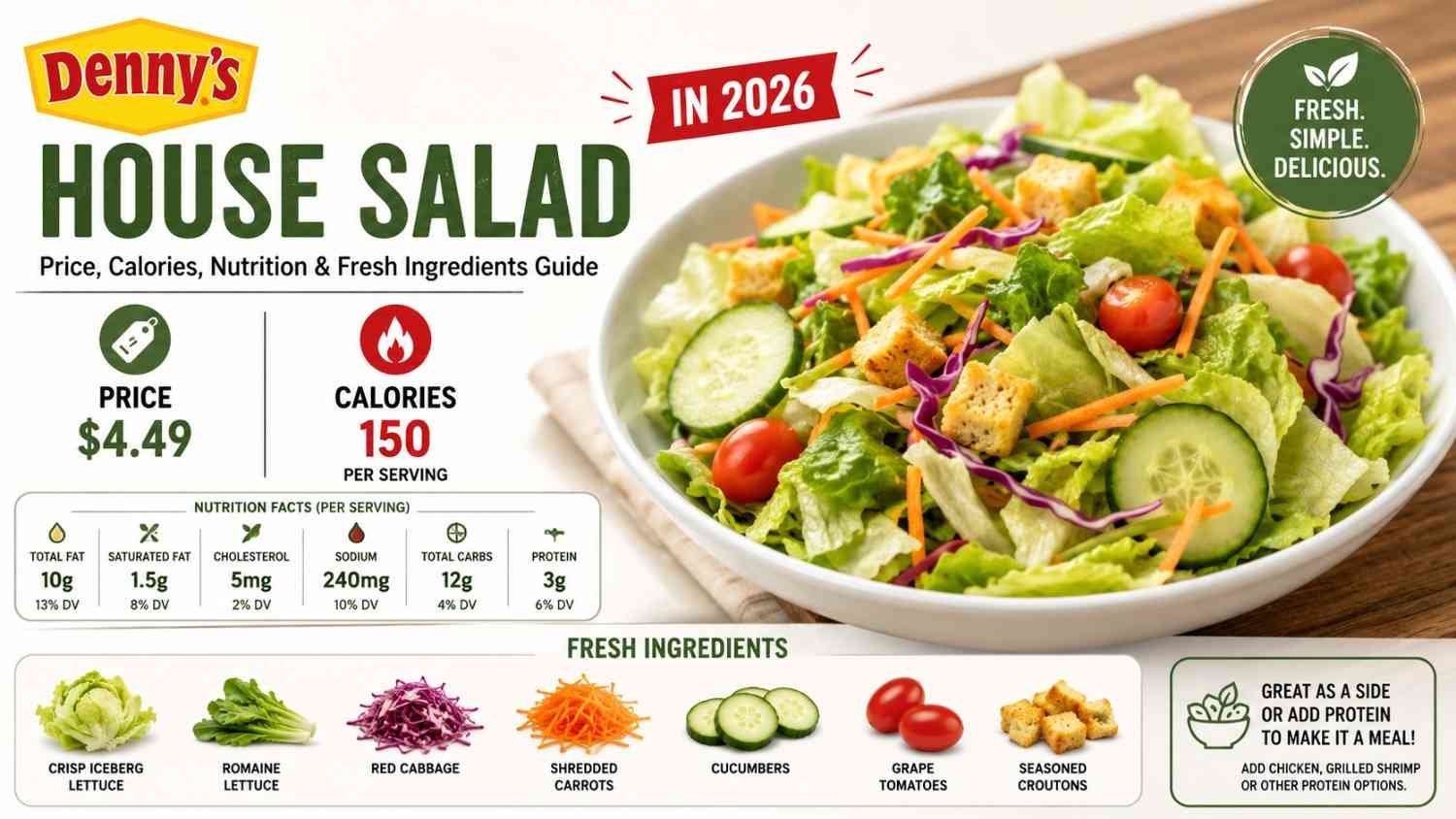
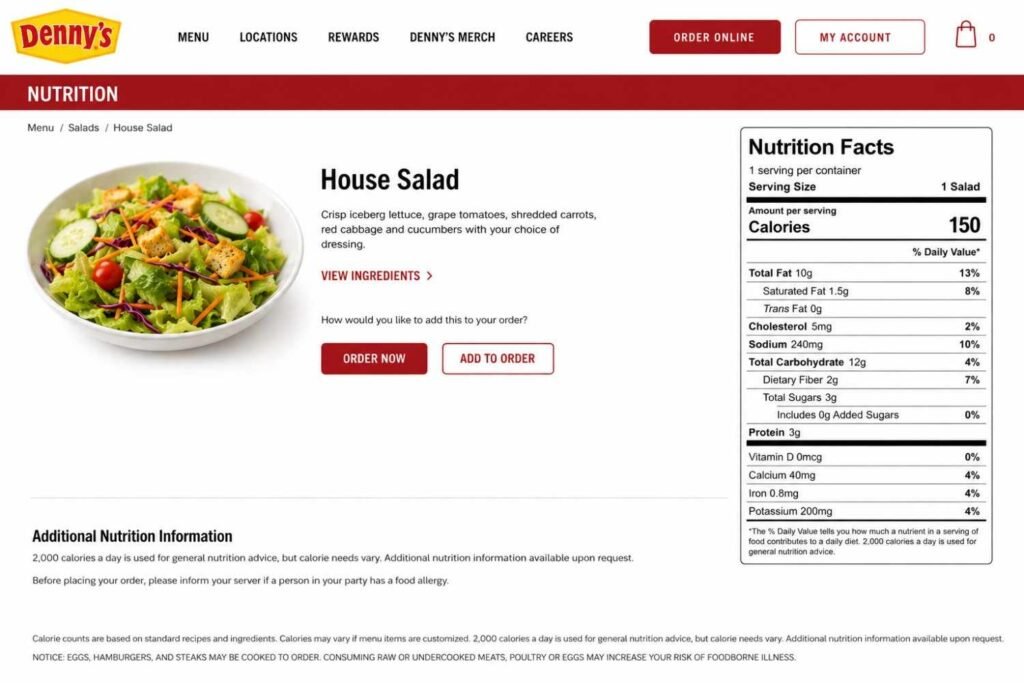
Denny’s House Salad is exactly what you’d expect from a classic American diner salad — simple, fresh, and no-fuss. It’s built on a crisp iceberg lettuce mix as the base and topped with a handful of familiar, everyday ingredients.
What you actually get in the bowl:
- Iceberg lettuce mix — includes shredded carrots and red cabbage
- Fresh cucumber slices
- Grape tomatoes
- Shredded cheddar cheese (made with pasteurized milk, cheese cultures, salt, and enzymes)
- Seasoned croutons (enriched flour, vegetable oil, yeast, salt, garlic powder)
That’s it. Nothing complicated, nothing unexpected. It’s a garden salad done the diner way — reliable and consistent across locations. Some people love that simplicity. Others wish there was a little more going on. Both reactions make sense.
One thing worth knowing: the salad comes without dressing. You pick your own from the available options, which actually gives you a fair amount of control over how the nutrition looks.
Denny’s House Salad – Price
The Denny’s House Salad price is approximately $8.99.
That said, prices at Denny’s can vary depending on where you are. A location in a city center or an airport area will often charge a bit more. Smaller towns and suburban locations usually land closer to that base price.
It’s also worth knowing that in some cases, the House Salad can be added as a side when you order certain combo meals — like the dinner combos — and the cost may work out a bit differently in that setup.
A quick tip: if you’re a Denny’s Rewards member, there are sometimes deals and discounts that apply to menu items including sides and salads. Worth checking the app before you order.
Price Overview:
| Format | Estimated Price |
|---|---|
| House Salad (standalone) | ~$8.99 |
| As a side in a dinner combo | Varies by location |
| With added protein (if available) | Extra charge applies |
Note: Prices may vary by location and are subject to change.
Denny’s House Salad Calories – How Many Are We Talking?
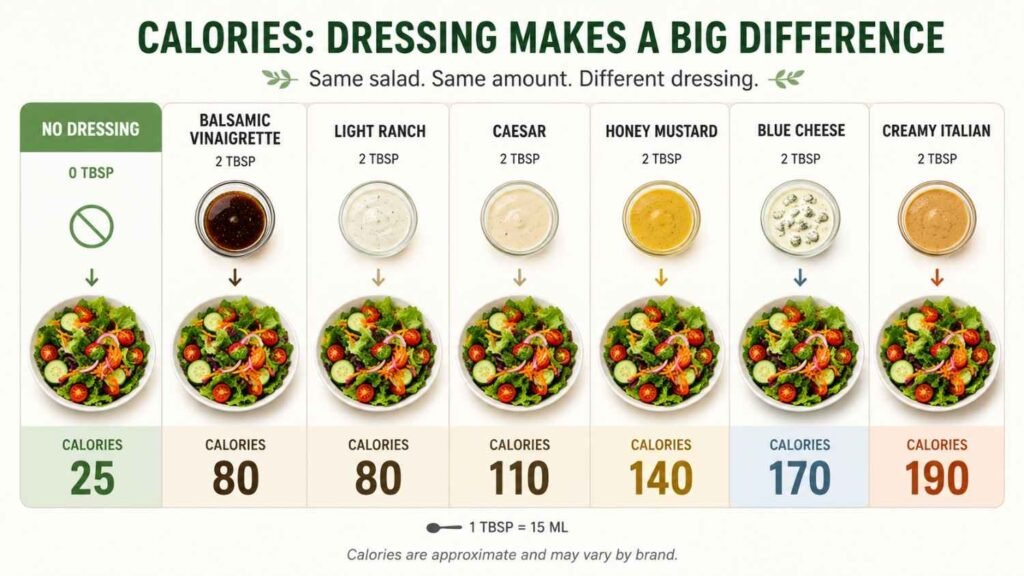
This is where things get interesting — because the calorie count changes quite a bit based on your dressing choice.
Without dressing: About 190 calories for a standard 10 oz serving.
That’s actually pretty low for a restaurant salad. Most salads at casual dining places sit much higher once you start adding heavy toppings, cheese, croutons, and dressing all together.
With dressing added: This is where it climbs. A full serving of ranch dressing, for example, can easily add 130–200+ calories on top. So the final number really depends on what you pour over it.
If you’re counting calories carefully, asking for dressing on the side is the smartest move. You end up using a lot less of it compared to when the kitchen pours it on before handing it to you.
Full Nutrition Facts
Here’s the breakdown for a standard 10 oz Denny’s House Salad without dressing:
| Nutrient | Amount | % Daily Value |
|---|---|---|
| Calories | 190 | — |
| Total Fat | 9g | 12% |
| Saturated Fat | 5g | 23% |
| Trans Fat | 0g | — |
| Cholesterol | 20mg | 7% |
| Sodium | 340mg | 15% |
| Total Carbohydrates | 19g | 7% |
| Dietary Fiber | 3g | 11% |
| Sugar | 6g | — |
| Protein | 9g | — |
The macronutrient split comes out to roughly 39% carbs, 42% fat, and 19% protein — without dressing.
The 9 grams of protein is mostly coming from the cheddar cheese. Not a huge amount, but it’s something. If you want to turn this into a more filling, protein-rich meal, adding grilled chicken on top is a smart option.
The sodium is at 340mg without dressing, which is reasonable. Add a creamy dressing and that number can jump pretty quickly, so if you’re watching sodium intake, light Italian or balsamic vinaigrette are smarter picks.
Dressing Options Available
Denny’s gives you a solid set of dressing choices for the House Salad. The main options you’ll typically find:
- Ranch (the most popular by far)
- Blue Cheese
- Honey Mustard
- Balsamic Vinaigrette
- Thousand Island
- Light Italian
Ranch is what most people go for — no surprise there. But if you’re trying to keep calories under control, Light Italian or Balsamic Vinaigrette are much better choices. They add flavor without loading on the fat and calories that come with creamy dressings.
One observation: the croutons already add a decent amount of salt and texture, so you don’t necessarily need a heavy dressing to make the salad taste good. A lighter vinaigrette works well and lets the vegetables come through more clearly.
Is the House Salad Healthy?
For a fast-casual diner salad, it holds up pretty well. Here’s an honest take:
The good stuff:
- Under 200 calories without dressing
- Some fiber from the lettuce mix and vegetables
- No artificial-sounding mystery ingredients
- Reasonable sodium for the base salad
Where it falls short:
- Iceberg lettuce isn’t the most nutritious base — spinach or romaine would offer more vitamins and minerals
- The cheddar cheese adds saturated fat (5g is almost a quarter of your daily recommended amount)
- Croutons are refined carbs — fine in moderation, but worth knowing about
- Without added protein, it won’t keep you full for very long
A lot of people make the mistake of ordering just the salad and thinking it’ll be enough for a full meal. It can work as a light lunch, but for most people — especially if you’re physically active or just genuinely hungry — you’ll want to add something else to it.
Adding grilled chicken is the most obvious upgrade. It bumps the protein significantly and turns the salad into a more complete meal without blowing up the calorie count.
Denny’s House Salad vs. Other Salad Options
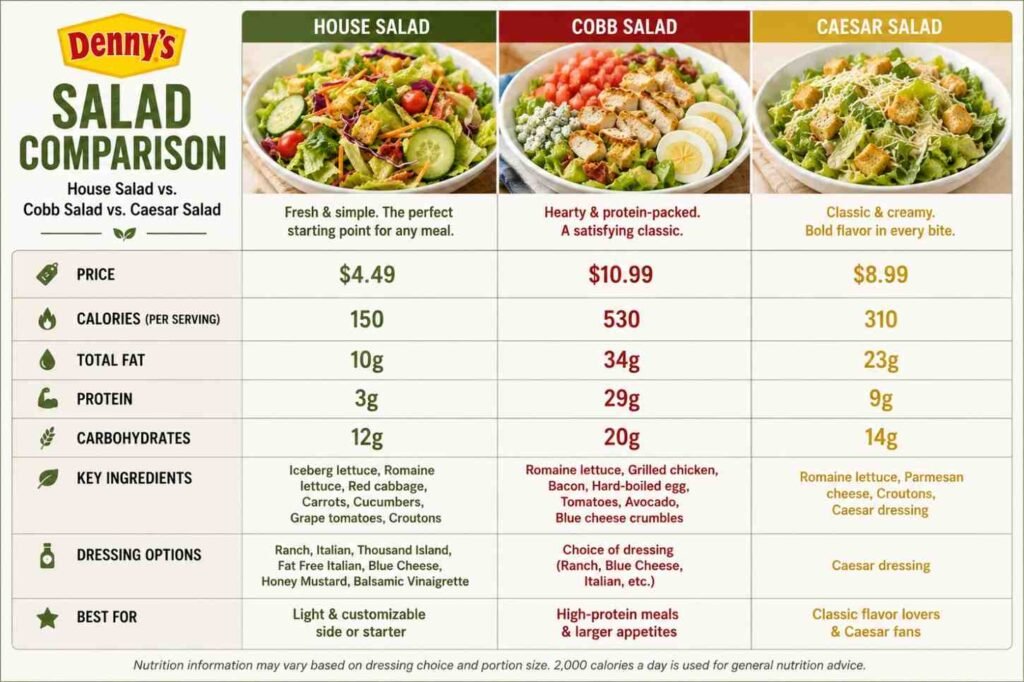
Denny’s also offers a Caesar Salad and a Cobb Salad. Here’s how they compare at a glance:
| Salad | Starting Price | Calorie Range | Best For |
|---|---|---|---|
| House Salad | ~$8.99 | 190+ (without dressing) | Light side, calorie-conscious eaters |
| Caesar Salad | Higher | More calories | People who want more richness |
| Cobb Salad | Higher | Higher due to toppings | Protein-heavy meals, filling lunch |
The House Salad wins on price and base calorie count. The Cobb wins on fullness and protein. If you’re going to Denny’s with a group and not everyone wants a heavy entree, the House Salad is the easy default option — it works alongside anything.
Tips for Ordering the House Salad at Denny’s
A few things that actually help when you’re ordering this:
Ask for dressing on the side. Every time. You’ll use half as much and save a noticeable number of calories without sacrificing flavor.
Skip the croutons if you’re low-carb. They’re easy to leave off — just mention it when ordering. The salad still has plenty of texture from the vegetables and cheese.
Add grilled chicken if you’re making it a meal. Without protein, the House Salad is a side dish, not a lunch. The chicken makes it a real meal.
Check if you can substitute the base. Some Denny’s locations may allow substitutions on request. It doesn’t hurt to ask if you prefer romaine or a mix over iceberg.
Time your order. Denny’s is open 24/7, and the House Salad is available all day. So if you want a lighter option late at night or early in the morning, it’s actually there.
Who Should Order the House Salad?
This salad works best for specific types of diners:
- Someone eating with a group ordering heavy food and wanting something lighter on the side
- A person watching calorie intake at a casual dining spot where lighter options are limited
- Anyone who wants a quick, low-cost vegetable addition to their meal
- Diners combining it with a soup or sandwich from the combo menu
It’s probably not the best choice for someone who is very hungry and wants a full meal on its own — unless protein is added to it.
A Quick Note on Freshness
One thing that surprises some people about Denny’s salads: they’re usually pretty fresh. The lettuce isn’t wilted or sitting in water, the tomatoes are typically firm, and the cucumber slices are clean and crisp. This isn’t always the case at every location, of course, but the consistency across most Denny’s restaurants is decent for what it is.
The ingredients are straightforward and don’t involve complicated preparation — which actually works in favor of freshness. There’s not much that can go wrong with iceberg lettuce, tomatoes, cucumber, and cheese sitting in a bowl.
Read More: https://dennysmenus.site/dennys-boneless-wings-price-nutrition-calories/
Frequently Asked Questions
How much does Denny’s House Salad cost?
The standard price is around $8.99, though it can vary slightly by location. Urban or airport Denny’s locations tend to charge a little more.
The standard price is around $8.99, though it can vary slightly by location. Urban or airport Denny’s locations tend to charge a little more.
How many calories are in Denny’s House Salad?
Without dressing, it’s approximately 190 calories for a 10 oz serving. With dressing added, the total depends on which dressing and how much is used — expect anywhere from 230 to 380+ calories total.
What are the main ingredients in Denny’s House Salad?
The salad contains iceberg lettuce mix (with carrots and red cabbage), cucumber slices, grape tomatoes, shredded cheddar cheese, and seasoned croutons.
What dressings can you get with Denny’s House Salad?
Common options include Ranch, Blue Cheese, Honey Mustard, Balsamic Vinaigrette, Thousand Island, and Light Italian.
Is Denny’s House Salad gluten-free?
Not fully — the croutons contain gluten. You can ask to have them left off, but there’s always a risk of cross-contamination in a kitchen that handles wheat products. If you have celiac disease, speak with the staff directly before ordering.